 Follow @recoveredfactory on Instagram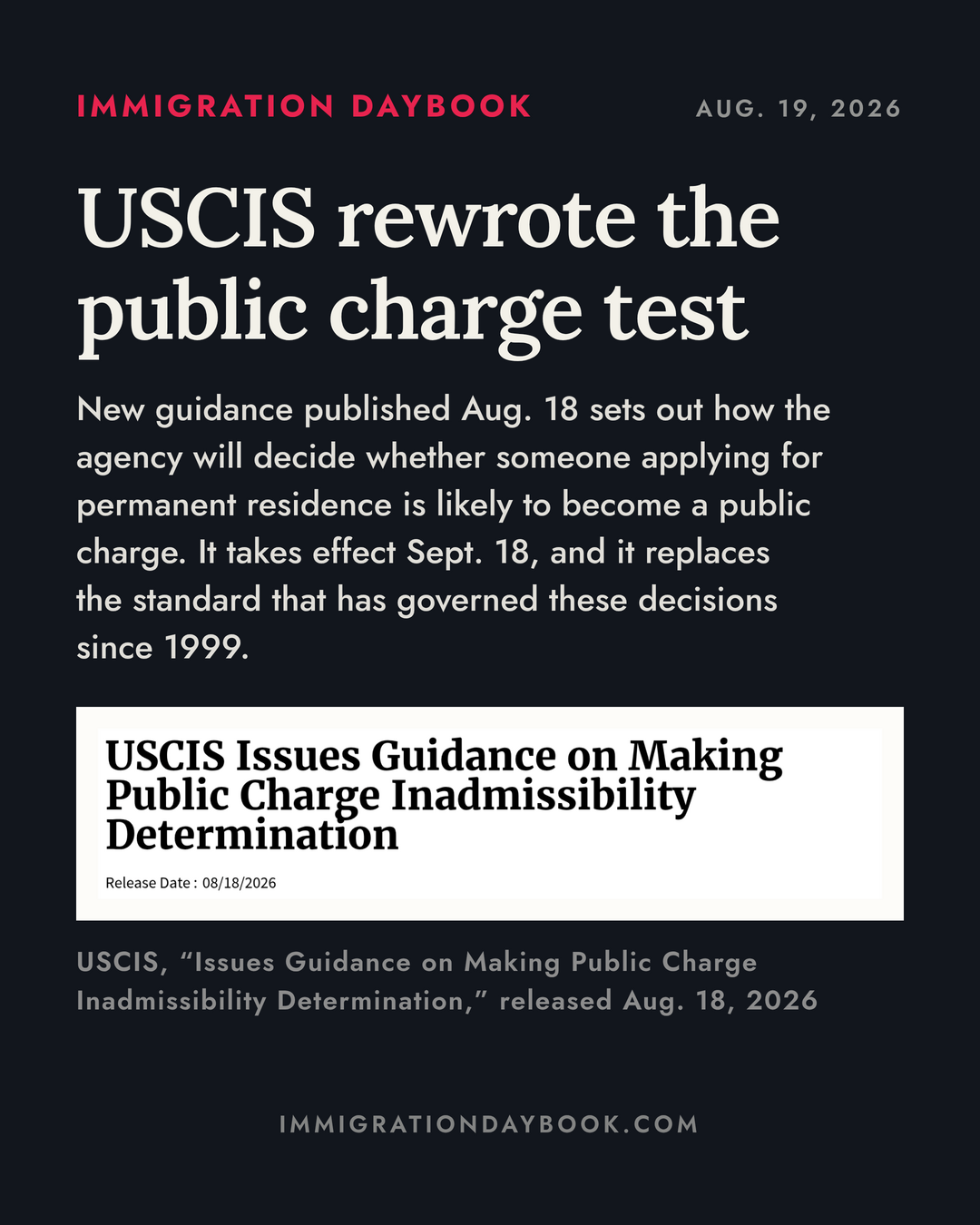

Swipe for more →
Today’s edition shows our commitment to surfacing Spanish language sources even when English coverage is thin. News about changes for permanent resident applications was heavily concentrated in Spanish and Telemundo ran a Spanish-only investigative piece about conditions in the Aurora, Colorado ICE facility. Because our news gathering system is language-neutral, they surfaced anyway. Produced in part with AI, all mistakes are my own. —David
Court lets Ethiopia TPS termination proceed while a bias claim continues
A federal judge declined to keep Temporary Protected Status (TPS) protections in place for Ethiopian nationals while their legal challenge continues. The ruling allows the administration to move ahead with ending the designation, while plaintiffs may continue pursuing a claim that racial or national-origin bias influenced the decision. Newsweek, Straits Times, CNN en Español
Recent weeks have seen TPS protections expire for several groups. People who lose TPS can also lose work authorization and protection from removal if they do not have another immigration status or avenue available. Sahan Journal
Get the Daybook in your inbox.
Free. Every weekday. English and Spanish.
We never sell or share your email. Unsubscribe any time.
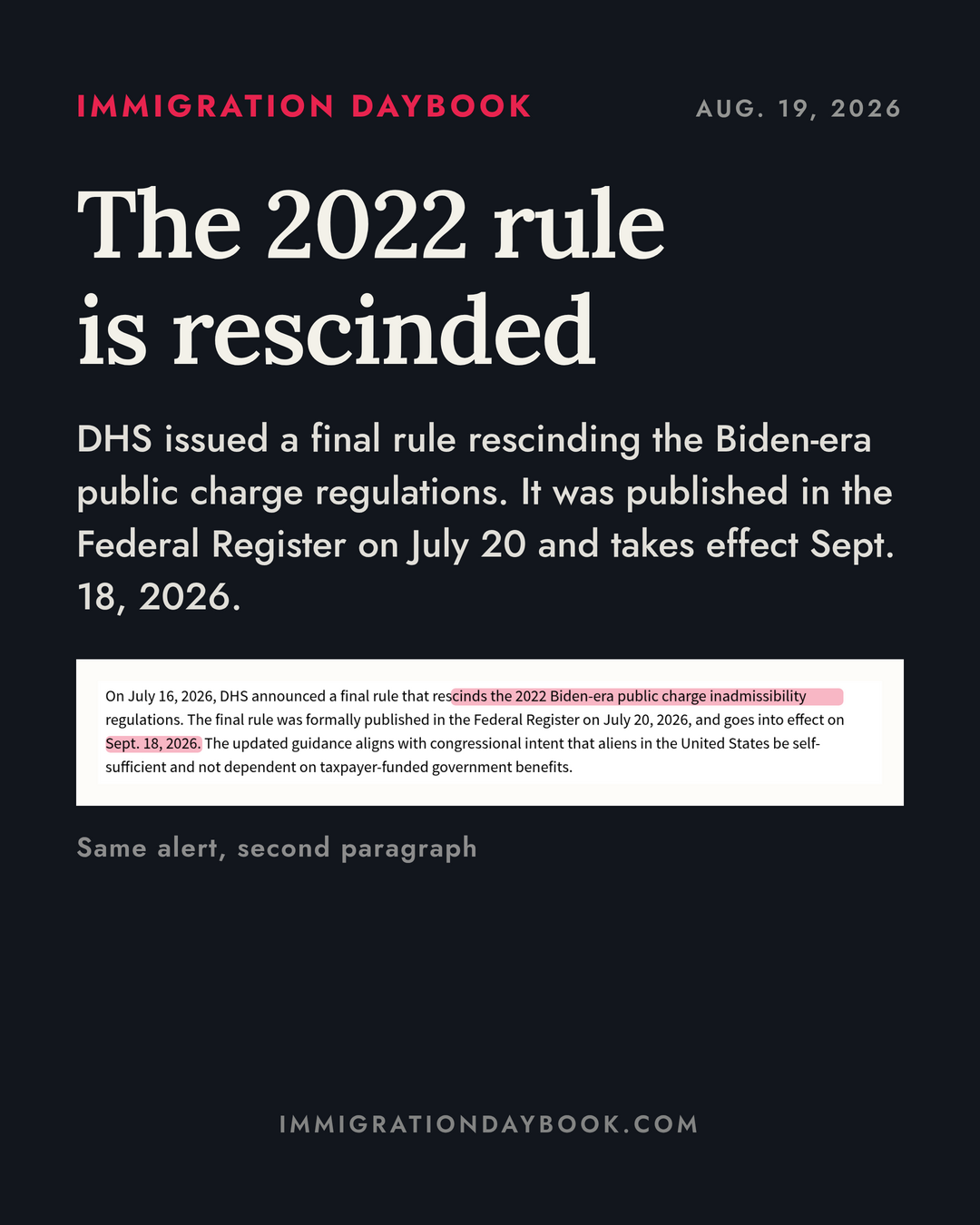
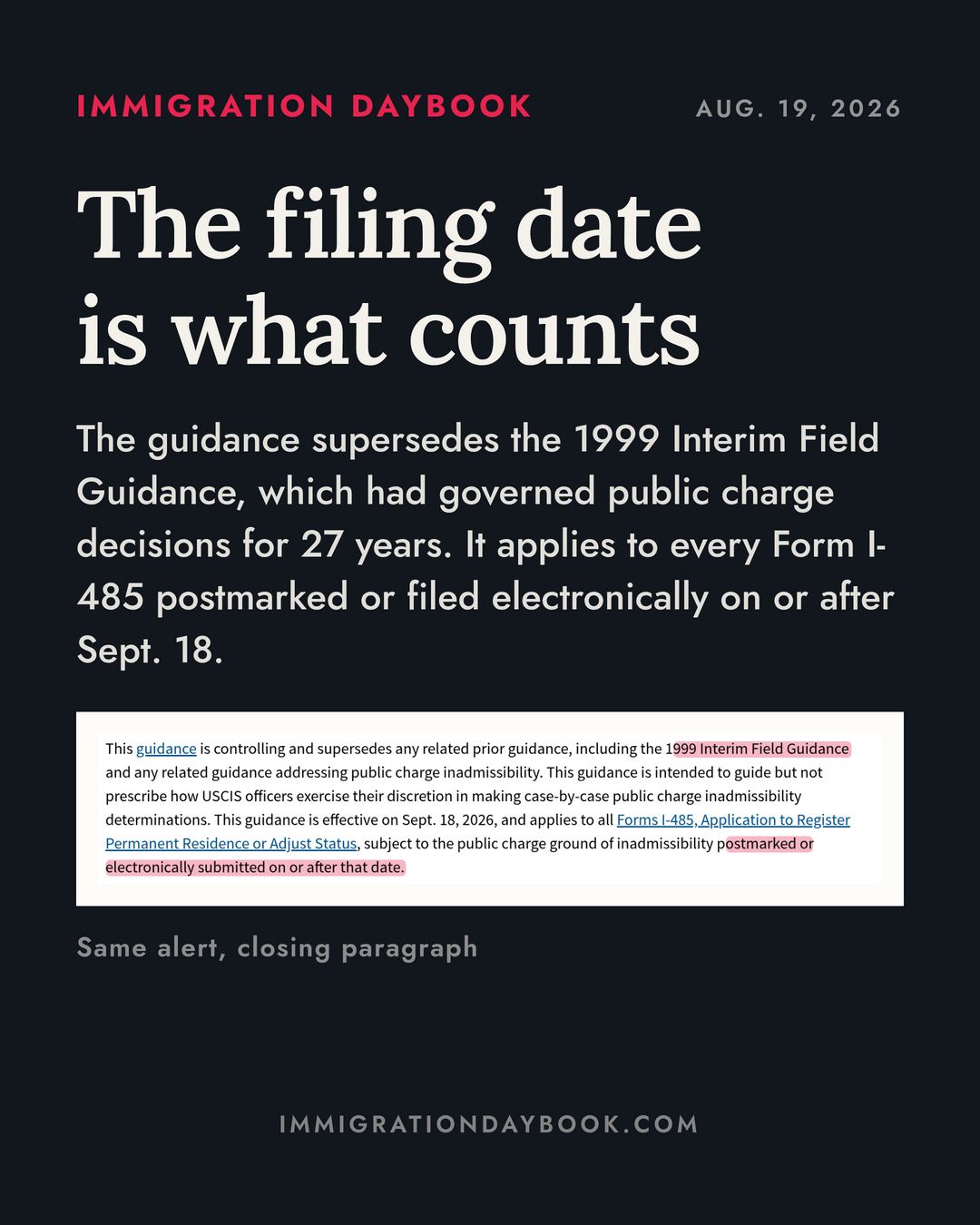
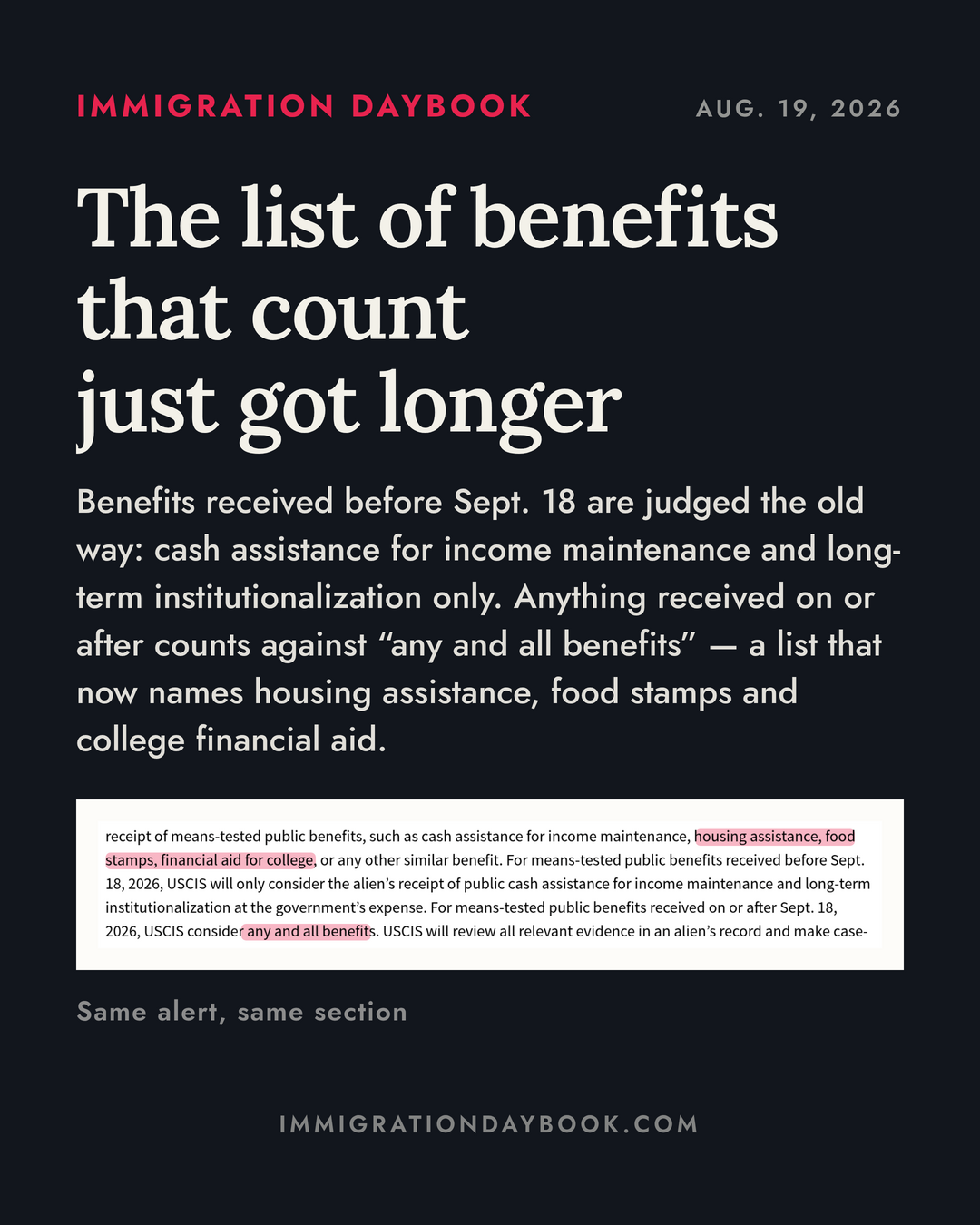
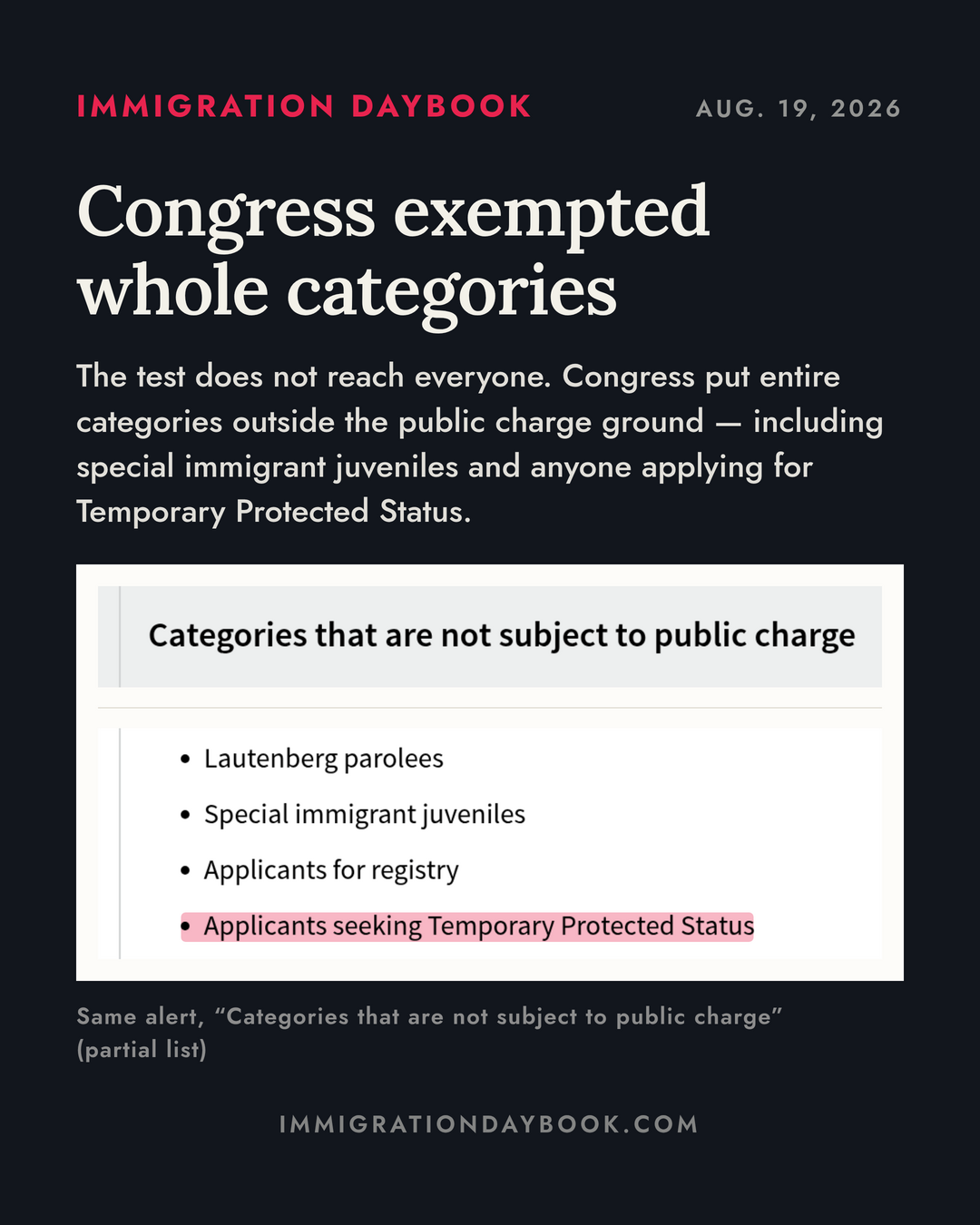
USCIS updates public-charge guidance for permanent-residence applicants
U.S. Citizenship and Immigration Services (USCIS) has published updated guidance on public-charge inadmissibility for covered applicants seeking adjustment to lawful permanent residence. The guidance explains which immigration categories are exempt and how a public-charge bond may be considered. USCIS, Telemundo McAllen, El Nuevo Herald
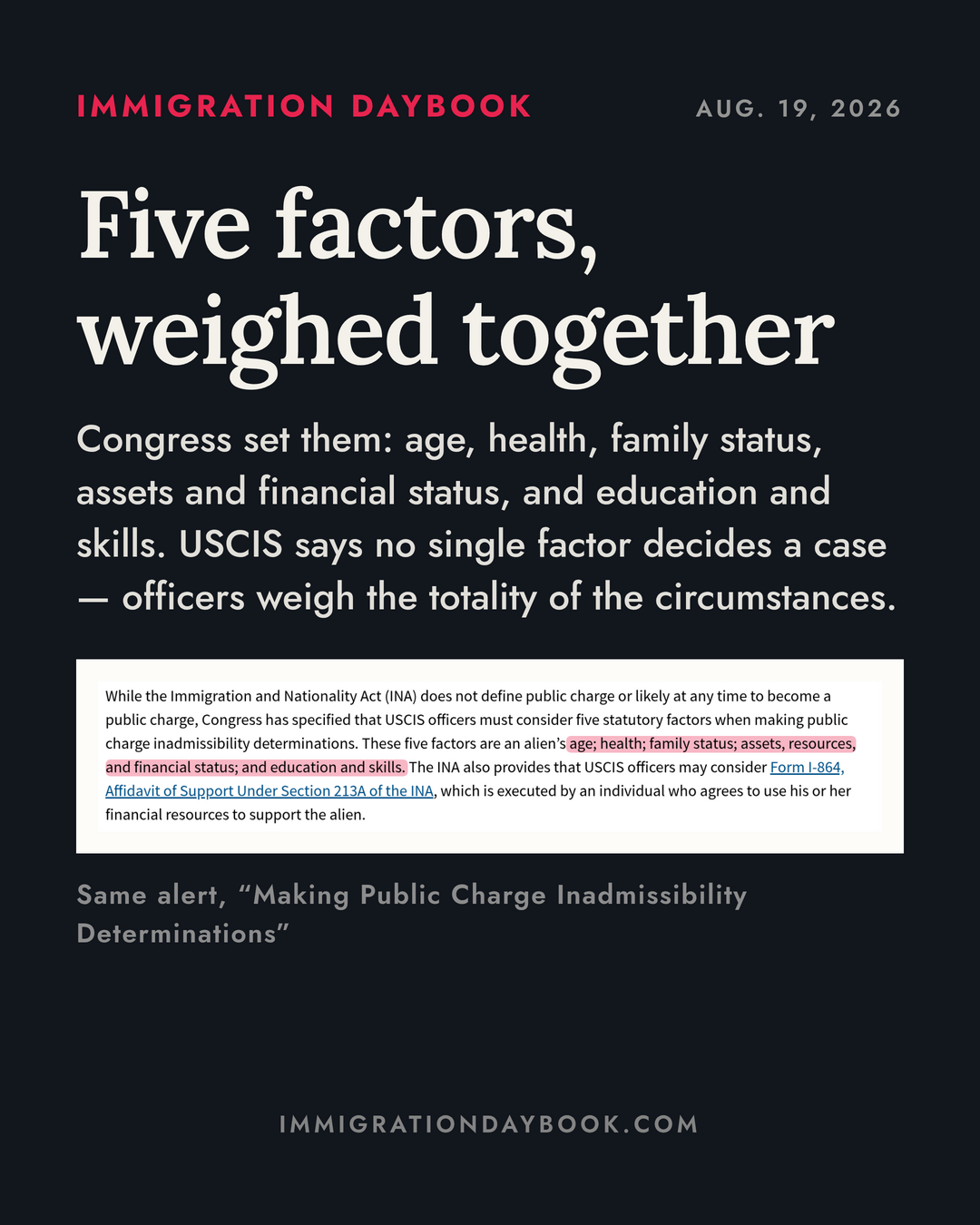
Officers are directed to assess the totality of the circumstances rather than treat one benefit or personal factor as automatically decisive. The factors identified include age, health, family circumstances, financial resources, education and skills, so the review turns on the applicant’s circumstances as a whole. El Comercio
Court oversight and new detention plans put immigrant children in focus
A court has moved to require additional independent oversight connected to protections for children in immigration detention. That puts compliance with safeguards for children held by the government under closer judicial attention. The Marshall Project, El Diario
Federal officials are seeking operators for an emergency facility intended to hold unaccompanied immigrant children. The proposed site would expand custody capacity and has drawn attention to the conditions and services available to children in government care. The Independent
The Independent article appears to refer to a contract originally posted July 16 to the System for Award Management. SAM.gov
Detainees describe medical-care and health concerns at Colorado ICE facility
Former detainees, a health worker and records reviewed by Telemundo describe concerns about medical attention, respiratory and gastrointestinal illnesses, food quality and tuberculosis-related conditions at Immigration and Customs Enforcement’s (ICE) processing center in Aurora, Colorado. ICE said there were no active tuberculosis cases or people still subject to contact tracing at the facility. Telemundo
Broader reporting examines a disconnect between ICE facility health ratings and reported health concerns, including deaths in detention. The gap raises questions about what formal inspections and evaluations capture, making this a distinctive Spanish-language reporting lane in the day’s coverage. Project on Government Oversight, CalMatters, KPBS Public Media
Upcoming
The next four weeks.
- Aug. 24, 2026
DHS wants to raise the cost of applying for US citizenship (Form N-400) from $760 to $1,330 on paper, and $710 to $1,280 online, with the appeal of a denial (Form N-336) going from $830 to $1,475. Reduced fees and fee waivers for naturalisation would end. Comments close Aug. 24 and implementation likely soon after.
- Aug. 25, 2026
Adults who want to take custody of an immigrant child who arrived without a parent or guardian would have to show more documents — proof of identity, proof of income, and information for background checks — before the Office of Refugee Resettlement (ORR) releases the child to them. Comments on the proposed rule are open until August 25, 2026.
- Aug. 28, 2026
The comment deadline closes on the DHS rule requiring foreign nationals in the US to register with the government and give fingerprints (Form G-325R). DHS is asking whether more immigration filings should count as registration on their own, and whether to change biometrics rules for some travelers; further rulemaking may follow.
- Aug. 31, 2026
Employers using the extra H-2B visas Congress allows for seasonal, non-farm jobs must file a sworn statement (attestation) that they meet the added conditions. The Labor Department is asking the White House budget office (OMB) to renew that collection — the requirement itself is not changing — and comments are open until August 31, 2026.
- Sept. 9, 2026
Starting September 9, the heaviest users of H-1B and L-1 visas owe a federal fee on every extension petition, not just when they hire someone new or take on another company's worker. The fee — $4,000 per H-1B petition, $4,500 per L-1 — applies to companies with 50 or more U.S. employees when more than half of them are on H-1B or L-1 visas. DHS says its old reading of a 2015 law wrongly let same-employer extensions skip the fee; this rule closes that gap through September 2027.
- Sept. 15, 2026
International students (F-1), exchange visitors (J) and foreign media staff (I) can currently stay as long as they keep their program going — "duration of status." This final rule replaces that with a fixed end date, and they would have to apply for an extension of stay to remain longer. It is a major rule under congressional review, so DHS may publish a different effective date.
Send this edition to someone who should have it.
The link carries “?via” and nothing else — no identifiers, no cross-site tracking.
Around the system
Chicago lawmakers are pressing the Justice Department to end mass immigration-court hearing practices that they say raise due-process concerns. WBEZ Chicago
An Idaho investigation found that Canyon County probation officers compiled a list of foreign-born people for ICE and shared information about probation appointments, raising concern that people with lawful status could be swept into immigration enforcement based on birthplace rather than verified status. InvestigateWest
San Diego County ended arrangements allowing federal immigration agencies to use local firearms-training facilities. Associated Press
Employment-based green-card backlogs have reached record highs as USCIS delays and denials increase, according to a new report from the American Immigration Council.
ICE officials are due at a contempt hearing over the repeated detention of a Baltimore-area resident after a federal judge ordered his release. The court is considering whether officials responsible for the rearrests defied prior orders, with possible sanctions if contempt is found. The Banner